How to Learn from My Permaculture Journey: Landscape Architecture vs Permaculture
Published on 3 August 2026 by Archana Gavas
My journey from landscape architecture to permaculture, the lessons I learned from designing living systems, and a beginner-friendly guide to understanding the difference between the two.

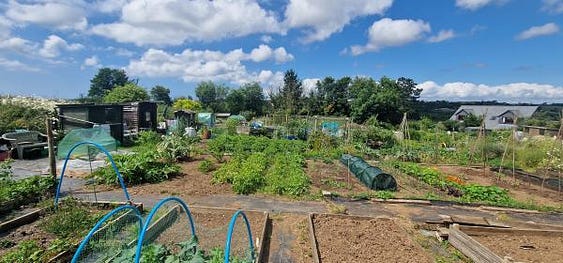
How to Learn from My Permaculture Journey and Lessons
Where My Story Began
When I look back, I realize my journey into permaculture and landscape architecture didn’t begin with a textbook, a degree, or even a mentor.
It began with a small terrace garden.
At that time, I didn’t even know what the words permaculture or landscape design truly meant. All I knew was that my client wanted to breathe life into a dull, concrete rooftop. They wanted green, shade, freshness, the feeling of a little oasis above the city. And I still figuring out my path as an architect and designer, decided to take on the challenge.
That first project was messy. I didn’t have a “professional” step-by-step plan. I didn’t have AutoCAD drawings for plant beds or a 3D rendering of what it would look like.
What I did have was curiosity, a few sketches, and the determination to create something alive.
And when I stood there weeks later, on that same terrace watching little saplings catch sunlight, herbs starting to grow, butterflies landing on flowers, I felt something shift inside me.
This wasn’t just about design. It was about life systems.
That was the seed that pulled me into this world: first landscape design, then permaculture. And today, I want to share not just the technicalities, definitions, and differences but my own journey of discovery. Because if you’re a beginner, trying to figure out whether to walk the path of landscape architecture or permaculture design, maybe my story can help.
What is Landscape Architecture? (And How I First Understood It)
youtube.com/watch?v=e0OrngJ3MgE
When I first stepped into this field, landscape architecture sounded like a big, intimidating word. Honestly, I thought it was just about making parks look beautiful. Later, I learned that it’s a professional discipline — a mix of art, science, and engineering focused on designing outdoor spaces for people.
Think about:
- City parks
- Resorts
- Housing society gardens
- University campuses
- Even highways with carefully planted trees and stormwater systems
The job of a landscape architect is to balance functionality (paths, shade, seating, water drainage) with aesthetics (plants, textures, views).
Back then, I didn’t fully get the depth. I just thought, “Okay, people want beauty outside their homes and buildings, and I can help design it.” But soon, I realized:
- Landscape architecture isn’t just “planting pretty trees.”
- It’s about understanding human use of a space.
- It’s about planning — sunlight, soil, wind, water, and movement.
- And yes, it involves a lot of software, CAD drawings, and coordination with civil engineers.
Example from My Terrace Garden Project
Press enter or click to view image in full size
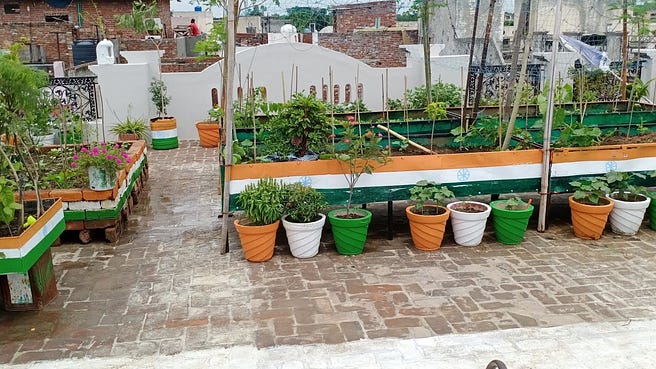
Terrace Garden Project
I’ll never forget my first brush with a “landscape architect’s dilemma.”
A client came to me with a simple dream: they wanted to turn their concrete terrace into a lush, green rooftop retreat. Picture it, plants, maybe a small patch of grass, planters overflowing with flowers, a space where they could unwind after a long day.
At first, it sounded straightforward. Just add soil, pick the right plants, and voilà!
But here’s where reality hit me: you can’t just dump tons of soil on a terrace. The building wasn’t designed to carry that much extra load. If I went ahead without thinking, the dream of a green terrace could have easily turned into a safety hazard.
That’s when I learned about:
- Lightweight soil mixes (using cocopeat, vermiculite, compost instead of heavy clay soil).
- Raised beds and modular planters that distribute weight evenly and reduce pressure on the slab.
- Drainage systems to prevent waterlogging (because nothing kills a rooftop garden faster than stagnant water).
I spent days experimenting, researching, and talking to experts. And finally, when the terrace began to transform into a safe, thriving green patch, I realized something powerful:
Landscape architecture is problem-solving, disguised as design.
It’s about holding a client’s dream in one hand and the hard realities of engineering in the other and finding a bridge between the two.
That terrace project taught me more than any classroom ever could. It taught me that landscape architecture isn’t a luxury or a finishing touch. It’s a way of shaping how people feel, move, and live in their environments.
And maybe, that’s why the word doesn’t intimidate me anymore. Today, when I hear landscape architecture, I don’t think of big textbooks or fancy degrees. I think of spaces that come alive -where nature and people coexist in harmony because someone took the time to design it that way.
What is Permaculture? (And Why It Felt Like Coming Home)
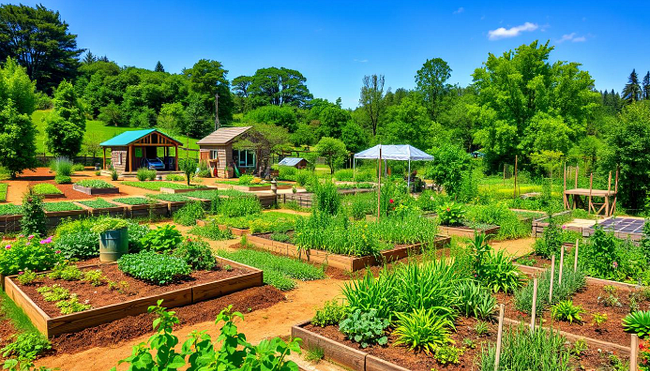
What is Permaculture?
If landscape architecture taught me how to arrange space with structure and order, permaculture spoke to something much deeper, it felt less like a profession and more like a philosophy of life.
I first stumbled across the word one night while scrolling through obscure blogs. Permanent agriculture. Permanent culture. At first, it sounded abstract, almost poetic. But the more I read, the more it felt like I had discovered a missing link — an idea that connected design, ecology, and human living in one continuous thread.
The essence of permaculture is simple yet profound: work with nature, not against it.
Instead of asking, How can I impose my design onto this space?, it asks:
- How does water naturally flow here, and can I guide it instead of blocking it?
- Which plants want to grow together, supporting each other like old friends, beans climbing corn, basil protecting tomatoes?
- Can the waste from one element, kitchen scraps, greywater, fallen leaves, become food for another, feeding soil, gardens, and life itself?
- How can this system get stronger year after year, instead of requiring endless new inputs and effort?
The more I read, the more I realized permaculture isn’t just about growing food or planting trees, it’s about designing living systems that regenerate themselves.
At its core, permaculture rests on three ethics that act like a compass:
- Earth Care — take care of the soil, the water, the plants, and all living beings.
- People Care — design spaces and systems that nourish communities and improve lives.
- Fair Share — use resources wisely, avoid waste, and share the surplus so that abundance circulates.
These three principles sound simple, almost obvious, but when applied, they completely change the way you see design.
I didn’t learn permaculture in a workshop or through a certificate course. I learned it by experimenting by getting my hands dirty. In my first terrace garden project, I built a small composting corner.
Nothing fancy: just a space where kitchen scraps could break down into soil food. Until then, I thought composting was just “waste management.” But the first time I saw rich, dark compost come alive in my hands and return to the plants, something clicked.
That single corner transformed the project. Suddenly, the terrace wasn’t just “green decoration” anymore it became a living cycle. Waste turned into fertility. Plants grew stronger. Water needs dropped. The space began to feel alive in a way I couldn’t quite explain.
And standing there, looking at that cycle unfold, I had one of those rare moments of clarity. I thought:
This isn’t just design. This feels right. This feels real.
It wasn’t about creating order for people to admire. It was about creating relationships for soil, for plants, for people, for the future. That’s when I understood why permaculture wasn’t just another style of design. It was, and still is, a way of reconnecting life to life.
Permaculture vs Landscape Architecture: The Way I Experienced It
If you search online for “permaculture vs landscape architecture,” you’ll find endless technical definitions, diagrams, and professional comparisons. But I want to explain it the way I lived it through my projects, mistakes, and little victories.
When I first entered landscape architecture, my mindset was simple: design outdoor spaces that people can use and enjoy. Clients wanted beautiful gardens, organized layouts, and practical spaces. My job was to translate those needs into drawings, 3D models, and eventually, physical landscapes.
Landscape Architecture (My Early Lens)
- Focus → The primary lens of landscape architecture is human usability and visual impact. Every design decision where a pathway should run, how tall a tree should grow, where to place a seating area is centered around people. How will they walk, sit, relax, or interact with this space?
- Tools → I relied heavily on CAD drawings, 2D plans, 3D elevations, and hardscaping layouts. These gave precision: exact measurements for paving, drainage slopes, and planting beds.
- Outcome → The final results were often functional, structured, and visually appealing outdoor environments. Think housing society parks, resort gardens, or neat residential courtyards. They worked well for people, looked good in photos, and made clients happy.
- Challenge → What I realized later is that these projects often depend on constant inputs irrigation systems to keep lawns alive, chemical fertilizers to maintain plants, or ongoing labor to trim and manage. Without these resources, the design starts to wither.
Landscape architecture, in short, felt like shaping land primarily for human comfort and beauty.
Permaculture (How It Spoke to Me)
When I stumbled into permaculture design, the perspective completely flipped. Instead of asking, “What do people want from this space?”, the first question became, “What does this land want to become? How does nature already work here?”
- Focus → Permaculture focuses on long-term balance, soil health, biodiversity, and self-sustaining systems. The idea is not just to create a permaculture garden that looks green for a season but to build a system that improves with time, needing fewer external resources every year.
- Tools → Instead of relying on CAD files, I leaned into observation, soil building, water harvesting, plant guilds, and natural cycles. For example, I learned to place plants that support each other together — like using legumes to fix nitrogen for fruit trees.
- Outcome → The results weren’t just “pretty spaces.” They gave food, shade, resilience, and life. A small terrace corner could provide herbs, compost, and pollinator habitats. A backyard could turn into a mini food forest.
- Challenge → The truth? Permaculture is not instant. It requires patience and a different lens of beauty. Many clients expected manicured lawns, but a real permaculture garden often looks more “wild” and natural. You trade polish for resilience.
Permaculture, to me, felt like healing land so that both people and nature thrive together.
In Other Words: What I Learned
After years of working across both, here’s how I summarize it:
- Landscape architecture is about designing land for people’s immediate use — comfort, aesthetics, and structure.
- Permaculture is about designing with nature’s intelligence, creating systems that regenerate themselves and support both people and ecosystems in the long run.
One disciplines the land; the other collaborates with it.
The 12 Principles of Permaculture (And How I Learned Them the Hard Way)
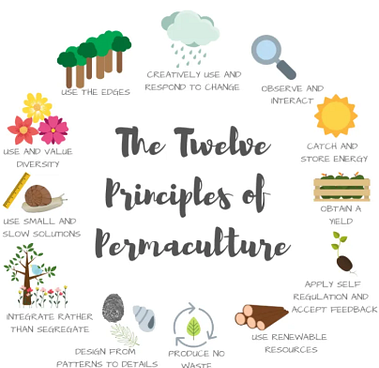
The 12 Principles of Permaculture
The first time I came across David Holmgren’s 12 principles of permaculture, I didn’t sit down and memorize them like exam notes. I stumbled into them one mistake, one correction, one surprising success at a time.
Each principle slowly revealed itself to me while I was experimenting with my terrace permaculture garden and later while working on community-scale designs. Looking back, I can clearly see how each principle became not just a guideline for design, but a life lesson.
Here’s how I personally experienced all 12:
1. Observe and Interact
When I first started my rooftop project, I was so excited that I rushed into planting. I didn’t notice that one corner got harsh sun all day while another stayed shaded. Result? Half the plants wilted within weeks.
Lesson: Nature doesn’t reward speed; it rewards attention. Now, before starting any permaculture design, I spend days just watching, where water flows, how wind moves, where the soil feels alive. Observation is the foundation of any sustainable garden or farm.
2. Catch and Store Energy
Early on, I realized the city water bill was skyrocketing just to keep the garden alive. That’s when I installed a simple rainwater harvesting drum. One monsoon later, we had enough stored water to irrigate for months.
In permaculture, energy isn’t just solar panels, it’s water, wind, nutrients, even people’s effort. Catch it when it’s abundant, so you don’t suffer when it’s scarce.
3. Obtain a Yield
At first, I focused too much on making the space look green. But when I planted basil, mint, and cherry tomatoes, something magical happened. The client’s family started cooking with them. Suddenly, the garden wasn’t just decoration, it was feeding people.
A permaculture system must give returns, whether it’s food, firewood, compost, or even community joy. If your permaculture garden isn’t producing, it’s incomplete.
4. Apply Self-Regulation and Accept Feedback
This one hit me when I overplanted fast-growing climbers. They looked great at first but later started choking smaller plants. A neighbor pointed it out, and at first, I resisted. But accepting feedback saved the whole setup.
Permaculture is humbling. You design, nature answers back. Sometimes it says “yes,” sometimes “not here.” Learning to adjust without ego is survival.
5. Use and Value Renewable Resources
I once bought expensive synthetic fertilizer, thinking it would boost growth. It did, for two weeks. Then the soil felt dead. That’s when I turned back to compost, mulch, and natural amendments like cow dung. The results lasted much longer and felt healthier.
Permaculture farming thrives when we lean on renewable cycles: composting, natural water flow, solar, plant synergy. Shortcuts from chemicals don’t last.
6. Produce No Waste
My biggest breakthrough was composting. Before, kitchen scraps went into the trash. After starting a compost bin, that “waste” became rich black soil that revived weak plants.
In permaculture design, waste doesn’t exist, it’s just a resource misplaced. Greywater, leaves, food peels, even cardboard, everything can be cycled back into the system.
7. Design from Patterns to Details
Initially, I obsessed over small details like which pot looked nicer. Later, I realized I should’ve started by mapping big patterns — sun paths, water flow, movement of people across the terrace.
Now, whenever I design, I sketch the big patterns first zones, sectors, natural flows, then fill in details like plant placement and aesthetics. Without patterns, details collapse.
8. Integrate Rather than Segregate
I once made neat “zones” of flowers in one corner, herbs in another, veggies somewhere else. It looked organized but didn’t work well. Pests attacked the monocultures, and watering felt like a chore.
Later, I mixed the flowers with herbs, veggies with shade trees. Suddenly, pests reduced, watering was easier, and the space felt alive. Nature thrives on integration, not separation.
9. Use Small and Slow Solutions
My mistake? Trying to build a full permaculture rooftop farm in one go. It was overwhelming. The soil mix failed, pests came, and I almost gave up.
When I restarted small with just a few herbs and one composting unit, I could manage better and see results. In permaculture gardens, slow and steady always outperforms “big and fast.”
10. Use and Value Diversity
One season, I planted only spinach. Within weeks, pests wiped out everything. But when I grew spinach alongside marigold, beans, and mint, the balance returned.
Diversity is insurance. In ecosystems, diversity keeps pests, diseases, and even climate stress in check. In permaculture farming, monocultures are the fastest way to fail.
11. Use Edges and Value the Marginal
At first, I ignored the tiny cracks at the edges of the terrace walls. Later, I experimented by planting creeping spinach there. It thrived, covering the edges with greenery and food.
In permaculture design, edges the spaces between two systems are the most productive. Riverbanks, fence lines, pond edges they hold hidden potential. What looks “marginal” is often powerful.
12. Creatively Use and Respond to Change
One year, a sudden storm destroyed half of my rooftop garden. I was devastated. But when I looked closer, some plants had survived, hardy varieties that adapted better. The next season, I replanted with those, creating a more resilient system.
Change is constant, climate shifts, markets change, people move. A good permaculture design doesn’t resist change; it adapts and grows stronger from it.
The Real Lesson Behind All 12 Principles
For me, these weren’t just permaculture principles on paper — they became a philosophy for living.
- Observe before acting.
- Use what you have.
- Give back to the system.
- Be patient.
- Embrace diversity.
- Adapt to change.
In short: design for life, not just for looks.
Every mistake I made in my permaculture garden became a reminder that nature is the best teacher, if we’re humble enough to listen.
Career Paths: What I Discovered About Both
Here’s where I got stuck for a long time: should I continue as a traditional landscape architect, or dive deeper into permaculture design?
Landscape Architecture Career Path
- Education: Typically requires a degree (BLA, MLA).
- Process: Site analysis, CAD drawings, construction oversight.
- Clients: Developers, governments, institutions.
- Income: Stable, structured, salaried.
Permaculture Career Path
- Education: You can start with a Permaculture Design Certificate (PDC) (72 hours).
- Process: Observe → Design → Implement → Adjust.
- Clients: Homeowners, communities, farms, eco-villages.
- Income: Less predictable, but rewarding. Often combines consulting, teaching, and hands-on projects.
For me, the question wasn’t just “career.” It was: what kind of life do I want?
Do I want to sit in an office drafting plans for malls, or do I want to stand barefoot in the soil, building living systems?
That inner tug slowly pulled me toward permaculture.
My Personal Turning Point
I remember one specific evening. I was on the same terrace garden, watering the plants. The sun was setting, painting the sky in oranges and pinks. The client’s little child ran to me, plucked a cherry tomato, and said:
“Look, it tastes so sweet!”
That moment broke something open in me. This wasn’t just design. This was about connection. The child wasn’t admiring marble flooring or manicured hedges, he was tasting life.
That’s when I knew: I’d keep learning landscape architecture, but my heart belonged to permaculture.
Why I Believe Permaculture Matters More Today
Here’s the raw truth: cities are suffocating. Landscapes are being designed for looks, not for life. Green lawns that guzzle water. Imported plants that need chemicals. Parks that look neat but offer no food, no pollinator habitat.
Permaculture offers something different:
- Food forests instead of lawns.
- Rainwater harvesting instead of drains.
- Compost instead of chemical fertilizer.
- Biodiversity instead of monoculture.
It’s not just design, it’s regeneration.
And in a world of climate change, soil loss, and water scarcity, regeneration is not optional anymore.
A Step-by-Step Beginner’s Guide (If You’re Curious Like I Was)
Press enter or click to view image in full size
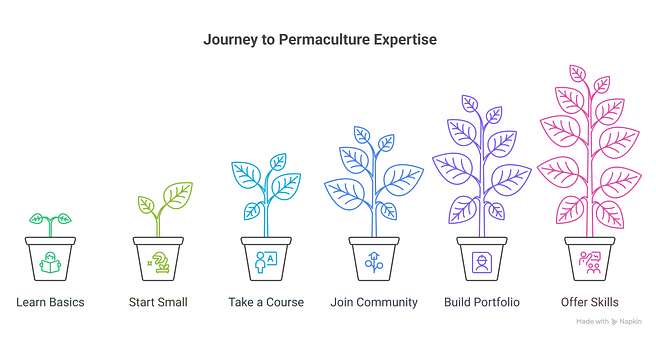
A Step-by-Step Beginner’s Guide
If you’re reading this and wondering, where do I start?, here’s the exact roadmap I wish someone had given me:
Step 1: Learn the Basics
- Read about permaculture principles (start with Permaculture Principles).
- Watch YouTube videos by Bill Mollison, David Holmgren.
Step 2: Start Small
- Don’t buy acres of land. Begin with a balcony, backyard, or terrace.
- Experiment with composting, companion planting, and rainwater collection.
Step 3: Take a Course
- Enroll in a Permaculture Design Certificate (PDC). Many are online.
- Example: Oregon State University PDC.
Step 4: Join a Community
- Volunteer at local farms or permaculture collectives.
- Share mistakes and successes. Permaculture is about community learning.
Step 5: Build a Portfolio
- Document your projects.
- Even small gardens can become case studies.
Step 6: Offer Your Skills
- Start with friends, family, or local communities.
- Slowly move into consulting, teaching, or project management.
Landscape Architecture and Permaculture Together
Now, don’t get me wrong, I don’t think it’s “either/or.” The truth is, the future lies in integration.
Imagine:
- A city park designed by landscape architects, but rooted in permaculture ethics.
- Residential landscapes that are both beautiful and edible.
- Public spaces that manage stormwater naturally, while creating habitats.
This is where I believe my journey is heading: to bridge both worlds.
Conclusion: From One Beginner to Another
If you’ve read this far, maybe you’re standing where I once stood — curious, confused, trying to decide between landscape architecture and permaculture.
Here’s my honest advice:
- If you want structure, professional recognition, and big projects → study landscape architecture.
- If you want to work with your hands, heal ecosystems, and live closer to nature → explore permaculture.
- If you’re like me, torn between the two → don’t choose. Combine them.
Because the world doesn’t just need beauty. It needs living beauty. Spaces that feed, nurture, and regenerate.
And maybe, just maybe that little terrace garden I started years ago was my first step in contributing to that.
Tags: Permaculture, Landscape Architecture, Sustainable Design, Regenerative Design

About Ar. Archana Gavas
Architect & Permaculture Designer | Farm Retreats, Eco Homestays, Food Forests, Agroforestry & Agrotourism | Consultation, Site Planning, Designing & Visualization - 4 years experience